
How Long Have Nicotine Pouches Been Around?
Nicotine pouches might seem like a relatively new phenomenon in the UK. But did you know they have a long history that dates back to Sweden in the 1700s? Celebrating 10 years since nicotine pouches were introduced to the world, this article takes a look at their evolution throughout time.
Best Bits
- Tobacco-free nicotine pouches emerged from Swedish tobacco snus.
- Swedish snus originated in the 1700s as a moist tobacco placed under the lip.
- Nicotine pouches entered the UK market in 2019.
- Since then, pouch formats, nicotine strengths, and flavours have evolved significantly.
Origin Story: From Swedish Snus to Nicotine Pouches
In recent years, nicotine pouches have steadily been gaining ground in the UK. But have you ever wondered where these tiny pouches come from?
The answer takes us all the way to northern Europe, to a small but plucky country with a penchant for innovation.
A Brief History of Swedish Snus
Let’s turn the clock back to Sweden in the 1700s.
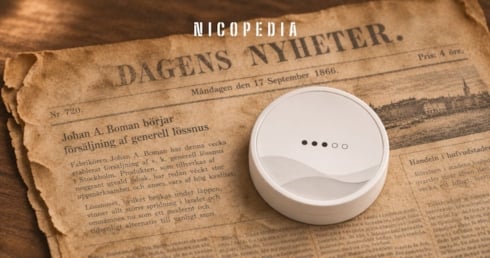
Back then, snus was quite different from the nicotine pouches we know today. It began as a form of dried, powdered tobacco, known as snuff, which was inhaled through the nose, and was initially a preserve of the upper class.
But over time, a new way of using snus soon began to develop. Moist tobacco was shaped by hand and placed under the upper lip.
By the 19th century, this had become popular across all classes in society.
The Next Step: Portion Snus
Fast-forward to the 1970s and Swedish snus underwent another transformation.
Instead of having to shape loose tobacco by hand, users could now buy snus in small, ready-made sachets, known as portions.
They were much easier to handle and more convenient, allowing Swedes to stay faithful to their habit without the messy fingers associated with loose tobacco.
This portion snus looked much more like the nicotine pouches we use today, just with one exception. They still contained tobacco.
It would take another 40 years for the next major innovation.
2014: Nicotine Pouches Enter the Stage
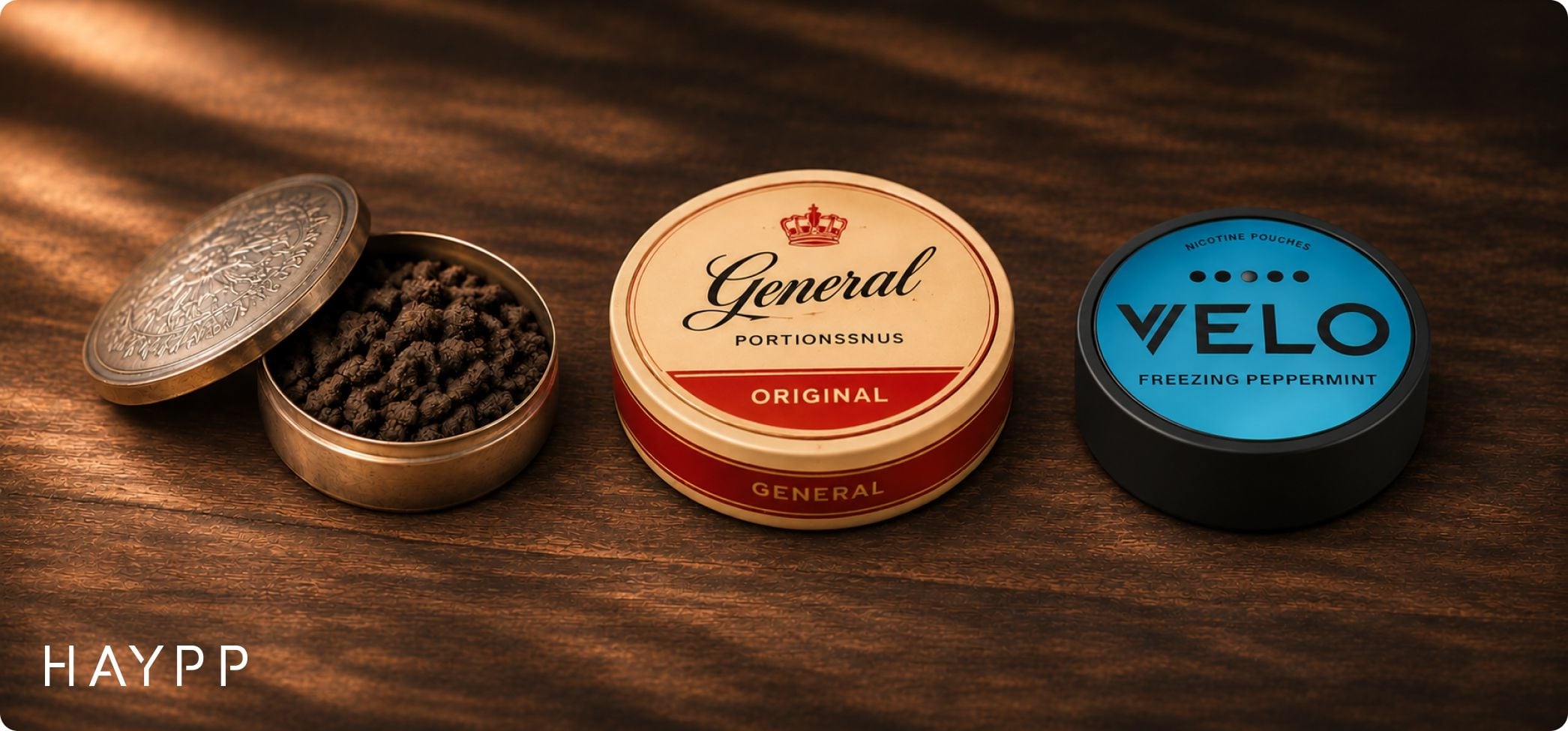
The first iteration of what would eventually become known as nicotine pouches appeared in 2014, marking a new chapter in snus history.
Known as white snus, these early products still contained tobacco, but a refined and purified version.
This gave the pouch a white appearance, in contrast to the dark brown tobacco snus. (Learn more about the difference between these two products in our snus vs nicotine pouches guide).
When ZYN launched in Sweden in 2016, this established nicotine pouches as a distinct category in their own right. By 2019, the category had gained a clear foothold in the market and even became popular with Swedish women (who had eschewed tobacco snus up until this point).
Time, then, to make an international debut.
From Sweden to the UK
For much of the 2010s, nicotine pouches were a largely Scandinavian affair. Traditional snus had been a mainstay of Swedish culture, so it wasn’t too much of a leap for consumers to embrace a tobacco-free alternative.
But for the British public, nicotine pouches were something entirely new.
Nicotine pouches first arrived in the country in 2019, with Nordic Spirit and VELO (then known as LYFT) among the first brands to launch.
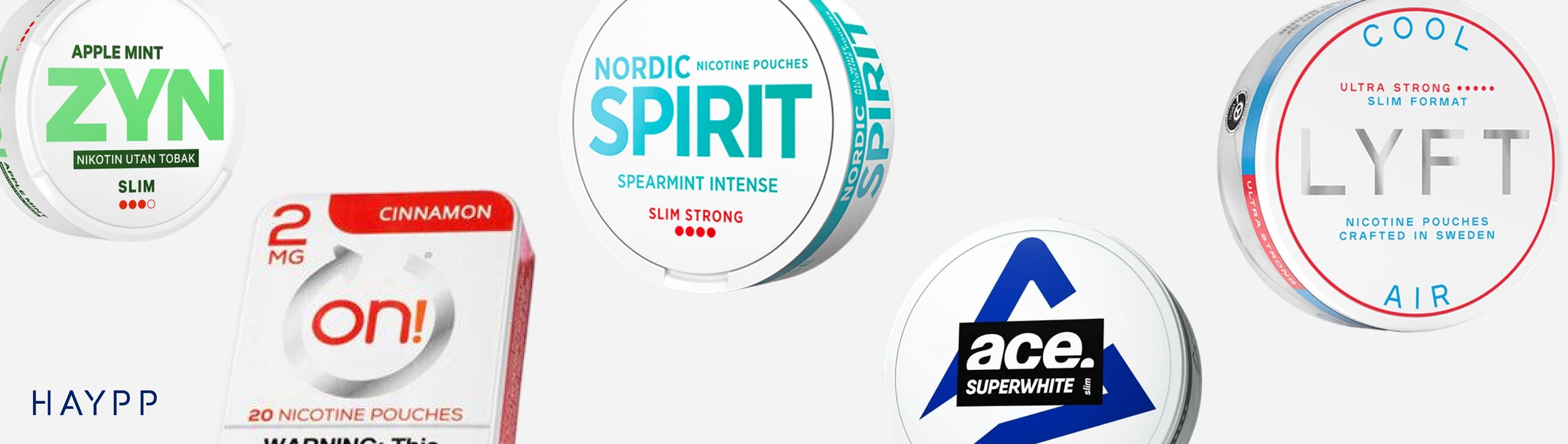
Haypp opened its digital doors in the same year, giving British customers access to a range of names that still sound familiar today: Skruf, On! and Ace Superwhite rubbed shoulders with Nordic Spirit and VELO.
Since then, tobacco-free nicotine pouches have steadily gained recognition among British consumers, with nicotine pouch use doubling between 2020 and 2024 according to one publication.1
According to a 2026 ASH survey, 1.4% of adults in the UK use nicotine pouches and 6.6% had tried them at least once.2
2026 marked another milestone in the category’s development. For the first time, nicotine pouches were subject to dedicated legislation under the Tobacco and Vapes Act. Previously, nicotine pouches had only been covered by general consumer protection legislation.
Quite the journey for something that was almost unheard of in Britain just a few years ago.
From Tobacco Snus to Nicotine Pouches: What’s Changed?
Today, nicotine pouches look pretty different to traditional Swedish snus, and even to some of the first white snus products that appeared in 2014.
Since that time, manufacturers have developed the format in several ways. Here’s some of the biggest changes from the past decade.
1. Pouch Format
Early white snus products were designed to offer a white, more discreet alternative to traditional tobacco snus, with a generally drier format.
Over time, manufacturers have developed slimmer pouches with a broader range of moisture levels. Nowadays, there’s different formats (such as mini or slim pouches) and moisture levels to choose from.
2. Nicotine Strengths
Nicotine strength has become another important way that pouches differ.
As the category has developed, strength ranges have expanded and evolved to give consumers more options, including nicotine free pouches, low strength pouches, and ultra strong options.
Haypp has its own strength categories to make it easier for customers to understand and compare products. Read more about our strength categories, and why we cap product strength at 20mg, in our nicotine pouch strength guide.
3. Flavours
Perhaps the most noticeable change has been the variety of flavours available.
Early nicotine pouch products drew inspiration from traditional Scandinavian snus flavours, such as mint, juniper, and pine. But as the category became more popular, manufacturers began to experiment with new and unusual nicotine pouch flavours.
Mint is still one of the most popular flavours, but now options abound for the curious consumer who can choose from fruit, coffee, or citrus flavour profiles, to name but a few.
The Next 10 Years: What’s Next?
From loose tobacco in 18th-century Sweden to the impressive range of tobacco-free nicotine pouches available in the UK today, the category has seen quite a transformation throughout the years.
In just over a decade, the modern pouch format has developed into a product with a huge variety of flavours, strengths, and formats, gaining popularity far beyond its home turf.
It remains to be seen where the next ten years will take us. But if the previous decade is anything to go by, there’s plenty more innovation to come.
FAQs A History of Nicotine Pouches
How long have nicotine pouches been around?
Modern tobacco-free nicotine pouches have been around for approximately 10 years, with ZYN launching in Sweden in 2016.
The very first white snus products emerged in 2014 as an alternative to traditional tobacco snus.
How long has snus been around?
Swedish tobacco snus dates back centuries, with its origins traceable to the 1700s with the upper classes inhaling snuff.
By the 19th century, ordinary Swedes had taken on the habit of placing moist tobacco under the upper lip.
When did nicotine pouches first arrive in the UK?
Nicotine pouches first arrived in the UK in 2019, with Nordic Spirit and VELO (then known as LYFT) among the first brands to enter the market. Haypp UK started in the same year.
What is the difference between Swedish snus and nicotine pouches?
The main difference is that traditional Swedish snus contains tobacco, while modern nicotine pouches are tobacco-free. Both products are placed under the lip.
