
The Problem with Tobacco Control and How to Fix It
Smoking rates have fallen over the past 20 years, but progress is slowing. MPOWER is a World Health Organization framework that relies on taxes, restrictions, and bans to reduce smoking. This article discusses an alternative EMPOWER framework that could push smoking rates down further.

Key Takeaways
- Smoking is more common in disadvantaged groups.
- Many adult smokers do not get clear information or support.
- Alternative nicotine products expose people to fewer harmful chemicals than cigarettes.
- Smoking rates are decreasing at slower rates despite increasing MPOWER taxes and restrictions.
- An EMPOWER approach that educates smokers about new products could help reduce smoking further.
A Debate Grounded in Science
Smoking rates have gone down in many countries over the past 20 years. But progress has slowed, and many people still smoke. Today, smoking is more common among people facing financial stress, lower access to healthcare, and other challenges. These groups often get less support from current policies.
With the Tobacco and Vapes Act set to shape UK nicotine policy, Haypp UK believes the debate must be grounded in science. That means recognising the differences between cigarettes and other nicotine products and asking whether restriction-led tobacco control is enough for adults who still smoke.
This editorial published in the journal Cureus looks at whether a more practical, person-centred approach could help reduce smoking further while also addressing health inequalities. Two of the authors work for Haypp Group.
What is MPOWER?
Many countries, including the UK, follow a tobacco control framework from the World Health Organization called MPOWER.
- M – Monitor tobacco use
- P – Protect people from smoke
- O – Offer help to quit
- W – Warn about risks
- E – Enforce advertising bans
- R – Raise taxes on tobacco
These policies focus on reducing smoking through rules, restrictions, and public health measures.
MPOWER vs. EMPOWER
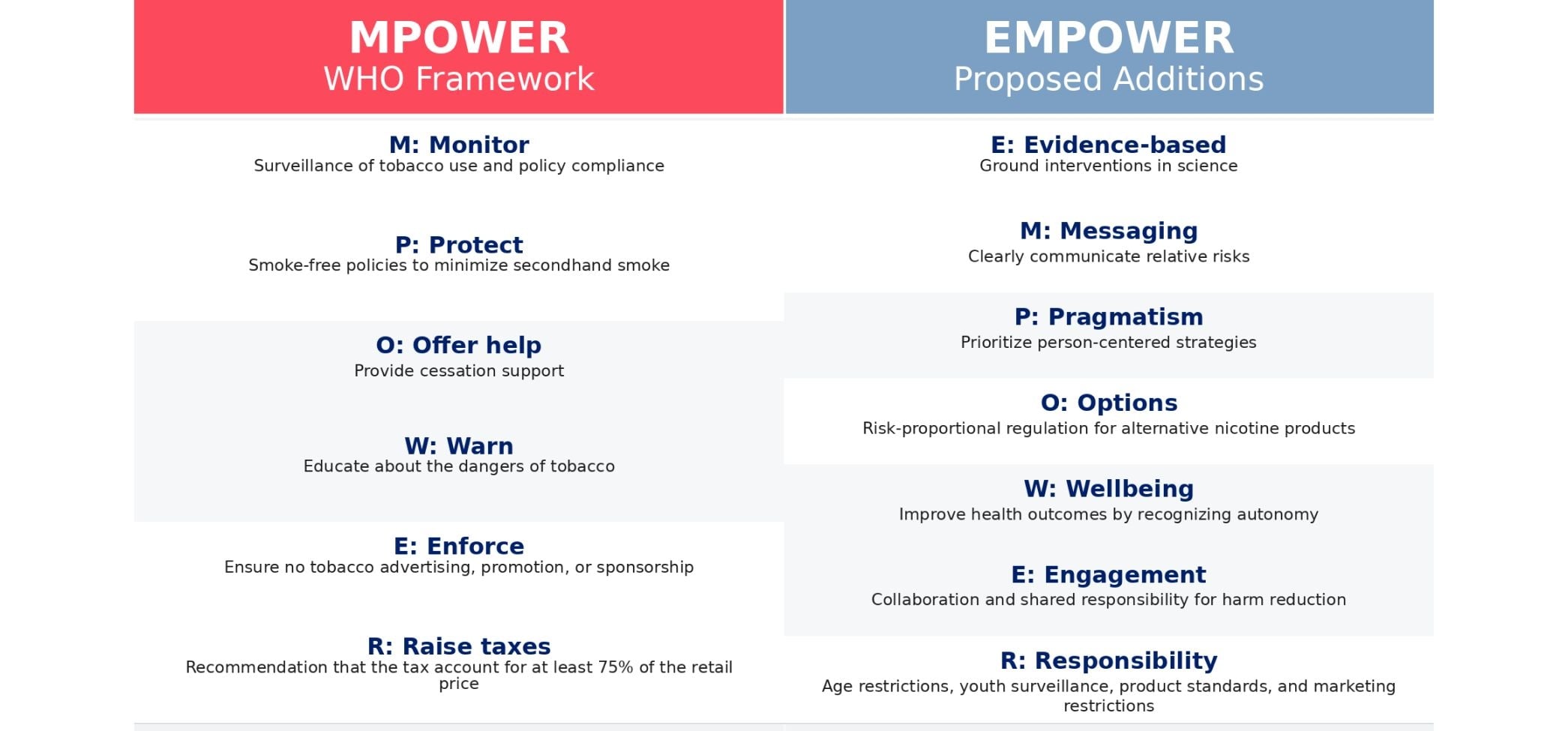
MPOWER focuses on restrictions and prevention. EMPOWER adds support, clear information, and practical alternatives.
Policies like taxes, advertising bans, and smoke-free laws have helped reduce smoking. But:
- Smoking is still common worldwide
- The decline has slowed
- Strict policies do not always mean low smoking rates
Who is still smoking? Smoking is more common among:
- People with lower incomes
- Adults aged 45–64
- People with disabilities
"Researchers are challenging whether restriction-led tobacco control alone can reach the adults who still smoke. The UK has an opportunity to lead by putting evidence, harm reduction, and adult access to lower-risk alternatives at the centre of tobacco policy."
Inequalities in Smoking
Smoking is now strongly associated with socioeconomic and health inequalities.
In the UK, large-scale survey data show that smoking prevalence is higher among disabled individuals (17.5%) than non-disabled individuals (11.7%), even after adjusting for sociodemographic factors.
Similar disparities are seen across income groups. In England, smoking prevalence is approximately 22.0% among those with household incomes of £13,500–24,999, compared with 10.9% among those earning more than £50,000.
This pattern is not limited to the UK. Across the European Union, smoking rates are around twice as high among low-income populations compared with higher-income groups (40% vs. 19%).
In addition to higher prevalence, people in lower socioeconomic groups are more likely to experience greater tobacco dependence and face more barriers to quitting, including lower motivation and reduced access to support.
The Harm Reduction Gap
There is a gap between access to cigarettes and alternative nicotine products, which many governments have banned to varying degrees, from flavor bans (e.g. Denmark) to total bans (e.g. France).
Alternative products do not involve burning tobacco and expose users to fewer harmful chemicals.
However, many people:
- Misunderstand nicotine
- Overestimate risks of alternatives
- Lack clear advice
- Live in countries without access to alternative products
A Different Approach: EMPOWER
EMPOWER adds support, communication, and real-world solutions. MPOWER and EMPOWER are compared in the table below.
What could this mean for public health?
- Help people not ready to quit nicotine
- Give clearer information
- Support switching away from cigarettes
- Reduce health inequalities
Smoking has declined, but progress is slowing. A more balanced approach may help reduce harm further.
FAQs MPOWER and EMPOWER Frameworks
What is harm reduction?
Harm reduction is concerned with reducing the risks linked to smoking.
Are all nicotine products the same?
No, risks vary based on the product.
Why do people still smoke?
Many people still smoke due to factors such as stress, income, health, and access to support.
What is MPOWER?
MPOWER is a WHO framework to reduce smoking through policies.
What is EMPOWER?
EMPOWER is a framework focused on practical ways to reduce harm.
